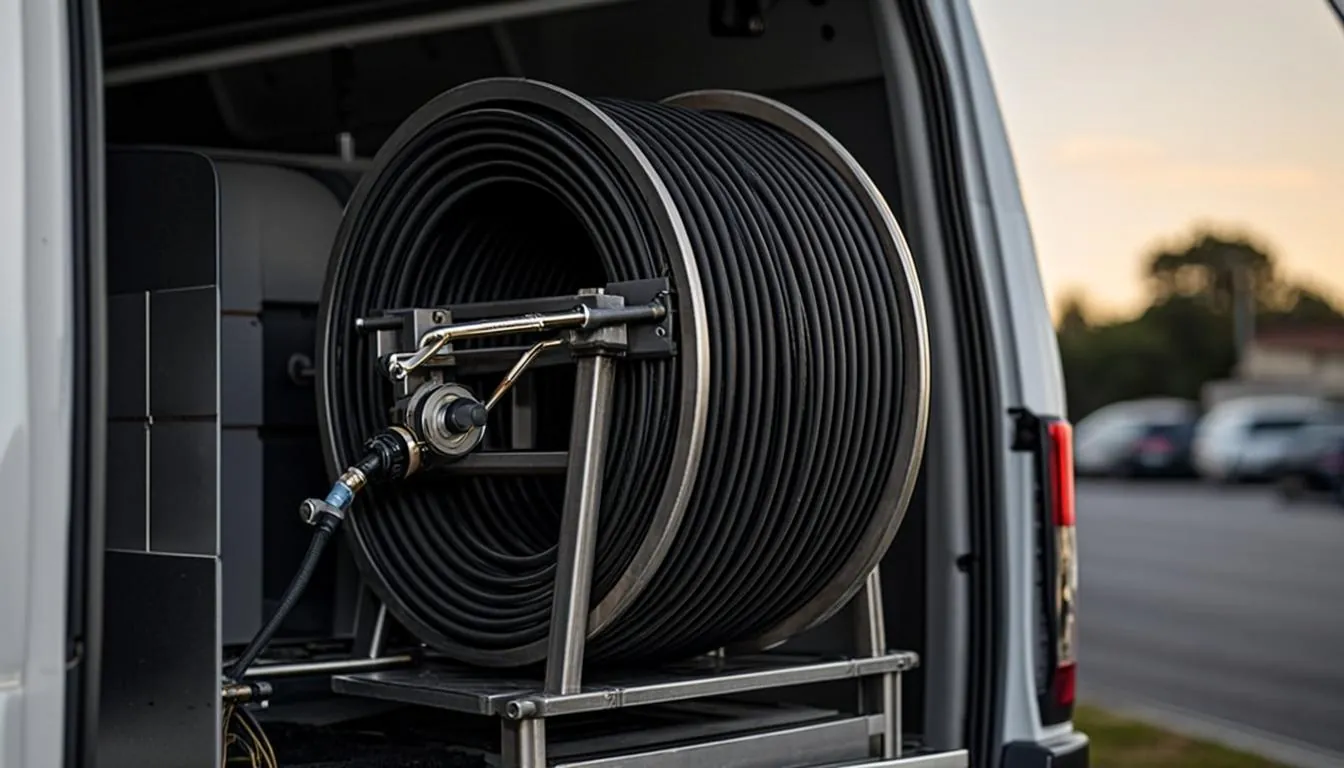
Sewer camera inspection Port Charlotte FL visits go straight at what every backup hides: the pipe's true interior condition. The head rides a reel in through a cleanout, and the monitor at the surface streams what the lens passes, so the pipe testifies instead of the symptoms. In this community, that homeowner-side footage is also the natural counterpart to the county's investigate-first process.
Sewer Camera Inspection Port Charlotte FL: What the Lens Finds
Six findings explain most sewer trouble, and each one looks different on screen.
| Finding | How it looks on screen | What it suggests |
|---|---|---|
| Cracks | Hairline or stepped breaks in the pipe wall | Structure is compromised; a repair candidate |
| Bellies | A low spot where standing water gathers instead of draining | Slope has been lost; cleaning helps, regrading lasts |
| Offsets | One section sitting lower or sideways at a joint | Settlement has pulled the joint out of line |
| Roots at joints | Fine hairs or thick masses entering at connections | Roots found an opening; entry points multiply with time |
| Buildup | Grease, scale, or sludge narrowing the channel | Capacity loss that cleaning can restore |
| Deformation | A flattened cross-section where the wall should be round | Years of overhead load re-shaping the pipe |
Every finding is called out at the monitor as it appears, tagged with how far it sits from the entry point, and saved to a recording you keep. Distance markers matter most of all, because they turn a vague problem somewhere under the yard into a measured location a repair quote can be built around.
The Counterpart to the County's Check
When a backup hits, Charlotte County Utilities checks the public side before anything else, confirming whether the county main itself is flowing. That check is the right first step, and the camera inspection is its mirror: the county verifies its pipe, and the camera verifies yours. Together the two records close the case; either one alone leaves half the story untold.
The division also explains who pays for what. A public main is the utility's to maintain, while the lateral running from your home to that main is private, with upkeep on the owner. Footage of the private side is therefore a record of an asset you are responsible for, whatever the county's check turned up.
What the Visit Looks Like
The visit itself is simple, and that simplicity is the point. Four steps cover it.
- Access. The camera enters through an existing cleanout or another access point; nothing gets dug for a routine pass.
- Travel time. The head moves at a pace that lets the recording catch detail, with distance counting as it goes.
- Live review. The monitor shows each finding as it comes into view, named and measured, so questions get answered on the spot.
- Your record. The visit ends with the footage and a written summary you can file, share, or build a repair decision on.
When to Book a Camera Pass
Sewer camera inspection Port Charlotte FL bookings tend to cluster around five situations, each of which changes what the footage is likely to show.
- Recurring backups. A line that empties, then backs up again within weeks, has a structural cause worth naming.
- Several slow drains at once. Fixtures misbehaving together points past a single trap, toward the main line.
- Before hardscape or major planting. Filming first avoids burying a defect you would pay extra to reach later.
- During a home purchase. Buyers inherit laterals along with kitchens, and an inspection prices that inheritance honestly.
- After clearing a serious clog. A verification pass confirms what the cleaning did and did not fix.
One limit is worth knowing before booking. Standing water or a full blockage can hide the walls the camera is meant to read, so a line that needs clearing gets cleaned first and filmed second. Describe your symptoms accurately when scheduling, and the visit arrives with the right equipment.
The lateral you are inspecting sits in unincorporated Charlotte County, which means the county, not a city hall, owns the public-side decisions around it.
Sewer Camera Inspection Cost in Port Charlotte
Most camera inspections land between $200 and $450; how easily the line is reached and how long it runs set the final number. If the line needs clearing before the walls can be read, that cleaning is quoted separately by the method it requires. Repair work, when the footage justifies it, is priced per case after locating, never from the symptoms alone.
Why Port Charlotte Homeowners Film the Line
Proof You Can Rewatch
A written opinion can be doubted; a recording of your own pipe cannot. You watch each defect appear, note its distance marker, and keep the file, which steadies every decision that follows.
Experience Reading Pipe
20+ years of underground diagnostics sharpen what a technician notices on screen: the difference between a scratch and a crack, a soft shoulder and a starting belly. Pattern recognition is why the written summary is worth keeping.
Live Phones for Active Backups
Inspections book through (941) 337-1250, where a person answers around the clock. Active backups get priority routing, while routine checks get the same thorough pass and the same recording.
Footage ends sewer arguments faster than anything else on the property. Sewer camera inspection Port Charlotte FL visits finish with a recording, distance-marked findings, and a written summary, so the next step is a decision instead of a guess. Book the pass and let your line tell its own story.
Related Services
The adjacent services below carry this job forward:
Frequently Asked Questions
Will the camera inspection tell me where the problem is?
Yes, with distance markers. As the camera head travels the line, the footage is tied to a distance reading from the entry point, so every crack, belly, and root mass gets a location, not just a description. That measurement is what turns a finding into a repair quote sized to the actual defect.
The utility cleared the main. Is a camera inspection still worth it?
Usually, yes. The county's check answers a different question: whether the public main is flowing. Your lateral and branch lines are private, and a blockage there remains after the utility drives away. A camera pass documents the homeowner side, which is the stretch you are responsible for and the stretch repairs are priced against.
How long does a recorded inspection take?
Most residential camera passes finish well within an hour of setup. Long laterals, heavy buildup, or a line that needs clearing first can extend the visit. The footage review happens on site, so you see each finding as it appears and leave with the recording and a written summary rather than a promise to mail results later.
Can a camera pass through a completely blocked line?
Sometimes the head slides past soft material; sometimes it cannot. When standing water or a full blockage limits the view, the honest move is clearing first, then filming so the pipe walls can actually be read. Booking a camera on a line that needs cleaning wastes the visit, so describe your symptoms accurately when scheduling.
Do buyers and sellers use sewer camera inspections?
Regularly. A purchase contract covers the visible house, but the lateral under the yard stays invisible until someone films it. Buyers book inspections to avoid inheriting a collapsed line, and sellers order them to answer questions before a buyer's inspector raises them. Either way, the recording replaces speculation about an expensive, buried system.
See Inside Your Sewer
Book a recorded camera pass and watch your line's condition on screen, every finding tied to a distance marker.