Underground water line leak Port Charlotte FL problems follow a pattern: the house behaves, and the yard does not. The stretch of pipe between the meter and your home is out of sight every day of the year, so when it fails, the clues arrive sideways as a soggy strip, a pressure drop, or a meter that will not sit still. This page is about that meter-to-home segment specifically, including where the county's job ends and yours begins.
Underground Water Line Leak Port Charlotte FL: The Meter-to-Home Stretch
Supply water travels a short chain: the county main under or along the street, the meter, then the service line that carries it to your home. The chain is only as strong as its least visible link, which is usually the buried private stretch. Failures there announce themselves in the yard rather than at a faucet, and that is what makes them confusing to diagnose alone.
Ownership has to be settled before testing makes sense. Charlotte County Utilities maintains the public side of the system, and the line from the meter or connection point to the house is generally the homeowner's, but the exact boundary varies by property. Confirming that line with the utility is step one; the county keeps utility and sewer service information residents can consult, and a quick call sorts the ownership question before anyone starts listening to the ground.
Signs Along the Service Line
Buried supply leaks telegraph their location if you know how to read the yard. Watch for the combinations below.
- A soggy strip with no source. One wet lane across the yard, between meter and house, during weeks when rain has been scarce.
- Pressure that fades. A whole-home drop in flow, felt at every fixture at once, can mean water is escaping before it ever reaches your valves.
- Meter movement with everything off. The classic sign: fixtures and appliances stopped, and the register still creeping forward.
- A wet or sunken meter box. Standing water where it should be dry deserves a look, especially alongside the other signs.
- The sound of running water. A hiss near an exterior wall or along the line's path while nothing is on.
One caution belongs here. Buried pressurized lines fail from age, wear, fittings, and installation history, not from one tidy story, and anyone who names a single villain before testing is guessing. Detection measures what the line is doing now, which is the only fact a repair can be built on.
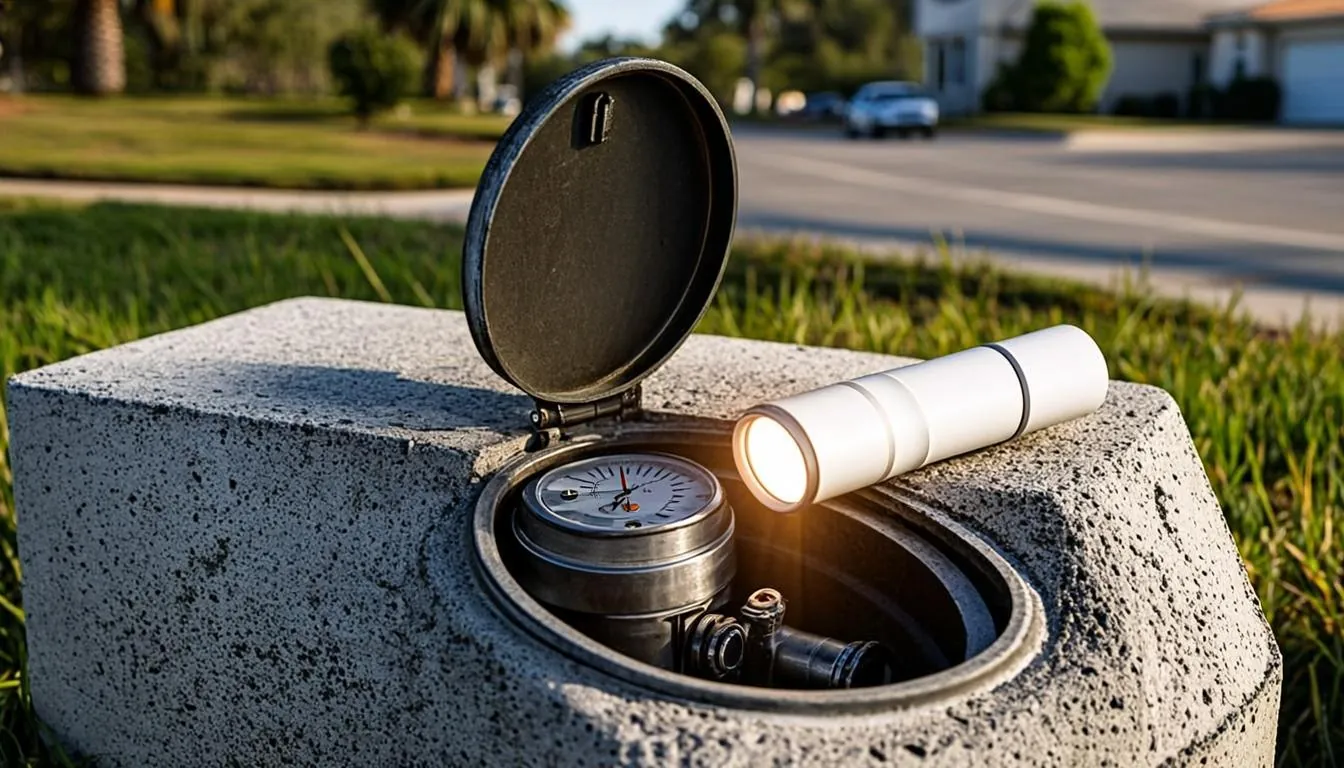
The Meter Test You Can Run Tonight
Homeowners can settle the biggest question in half an hour. Three readings do the work.
- Close every fixture, appliance, and irrigation zone, then write down the meter reading.
- Wait thirty minutes without using any water, and read the register again. Movement across that gap means water is escaping somewhere.
- Close the home's main shutoff valve and repeat the test. If the meter now holds still, the leak is on the house side of that valve; if it keeps creeping, the escape is between the meter and the valve, which is the buried stretch this page covers.
That third step is the fork in the road. Movement that stops with the valve closed points indoors, and the water leak repair path takes it from there. Continued movement points at the private line, and a detection visit takes over.
How the Private Stretch Gets Tested
Detection on a buried line leans on sound, pressure, and patience. The tools stack like this.
- Line locating. The service line's path is traced first, so the search follows the pipe instead of guessing across the lot.
- Acoustic ground listening. Pressurized water escaping underground makes noise, and surface microphones walk the path toward the loudest point.
- Pressure testing. The isolated line is watched on a gauge; a falling needle confirms the leak and hints at its size.
- Documented findings. The result is a marked location and a written summary, ready for a repair quote or a conversation with the utility.
Excavation, when it is ever needed, waits for the mark. Digging to search is how a one-clamp repair becomes a landscape project, and every tool above exists to prevent exactly that.
What Service Line Work Costs
Detection on the private stretch most often lands between $175 and $575, with the tools and access shaping where the bill settles. Repair pricing follows the findings and is quoted per case once the leak is located and the scope is visible. Locating first is what keeps the eventual dig small; that order is the whole savings.
Why Port Charlotte Homeowners Start at the Meter
Crews on Local Routes
Sarasota Leaks works the Port Charlotte area on routes crews already run, and 20+ years of regional leak work informs every reading. Lots here range from compact to sprawling around the canal grid, and the search adapts to each without drama.
The Utility Conversation, Prepared
Service line questions end with a phone call to Charlotte County Utilities sooner or later. Walking into that conversation with documentation that shows where the leak sits relative to the meter makes it shorter and clearer, whichever side of the boundary the answer lands on.
24/7 When Water Is Moving
A service line break can waste a lot of water very quietly. The line at (941) 337-1250 reaches a person at any hour, and a meter that will not stop spinning is treated as the urgent call it is.
Yard clues deserve better than guesswork. An underground water line leak Port Charlotte FL search ends with a marked location and a written finding, so the repair, if one is needed, targets exactly the right stretch. Call (941) 337-1250 and describe what the yard and the meter have been telling you.
Related Services
Continue through the diagnostic path that fits your situation:
Frequently Asked Questions
How do I know the leak is in the service line and not indoors?
Location clues differ. An indoor leak shows up as stains, drips, or damp surfaces inside, while a service line problem tends to leave the house dry inside and wet outside: a soggy strip along the pipe path, a meter that moves with every fixture off, or pressure that fades across the whole home. Detection separates them.
Who fixes what between the meter and my house?
That division is exactly why this page exists. Utilities own and maintain their side of the system; the line from the meter or connection point to your home is generally the owner's responsibility. The boundary point varies by property, so the first step is confirming with Charlotte County Utilities where its service ends, then testing the private stretch.
Does a pressure drop always mean a line leak?
A drop is a clue, not a verdict. Failing pressure can come from a service line leak, a partially closed valve, a failing pressure regulator, or utility-side work in the area. The diagnostic sequence rules each out in turn, starting at the meter and moving toward the house, before any excavation is discussed.
What should I do the moment I suspect an underground leak?
Note what you have observed: where the ground stays wet, when pressure changed, and whether the meter moves with fixtures off. Then stop irrigation temporarily so its water does not confuse the picture, and call for a detection visit. If water is moving fast or the meter spins hard, ask for urgent dispatch rather than a routine booking.
Will you dig up my whole yard to find the line?
No. Locating comes before digging, always. Acoustic listening, line locating, and pressure testing narrow the problem to a short section, and excavation, when needed, targets only that stretch. Most yards stay intact through the diagnostic phase entirely, and the dig that follows a confirmed leak is sized to the repair, not the search.
Trace the Line to the Meter
Meter to home, your service line gets listened to, pressure tested, and documented, so the fix targets the real stretch.