A sewer camera inspection in Sarasota answers the question every drain symptom eventually raises: what is actually going on inside the pipe? Guessing produces either needless digging or ignored problems. Camera inspection replaces both with a recorded look at the pipe itself.
What a Sewer Camera Inspection Actually Is
The setup pairs a waterproof camera head with a flexible push cable and a video monitor, letting a technician travel the lateral from the cleanout toward the main. A transmitter inside the camera head allows a locator above ground to mark the depth and position of anything noteworthy. Real-time viewing means you can watch the pipe's interior yourself during the visit.
Nothing gets dug and nothing gets opened beyond the existing access. Heavy blockages are usually cleared first so the camera can pass, and the line is returned to service as soon as the reel comes back.
Homeowners are usually welcome at the monitor. Seeing the pipe interior firsthand changes the conversation from trust to evidence, and it makes every recommendation that follows easier to evaluate on its merits.
What the Camera Finds Underground
Any credible sewer camera inspection in Sarasota should end with defects named, located, and severity-rated. Most have distinct on-screen signatures:
- Cracks and fractures. Linear breaks in the pipe wall, from hairline splits to open gaps where soil shows through.
- Offsets and joint defects. Sections shifted out of alignment at the joints, creating shoulders that catch debris.
- Root intrusion. Fine root hairs entering failed joints, matting into larger masses that trap paper and grease.
- Deformation. Pipe that is no longer round, flattened or oval-shaped by pressure or poor bedding around it.
- Buildup and scale. Grease layers, mineral scale, and accumulated solids that narrow the channel without yet failing the pipe.
- Bellies and low spots. Sections where standing water collects because the slope has failed, a common explanation for repeat clogs.
Each finding gets noted with its position and severity, which turns a vague complaint like "drains keep backing up" into a specific, addressable defect.
How Findings Are Recorded
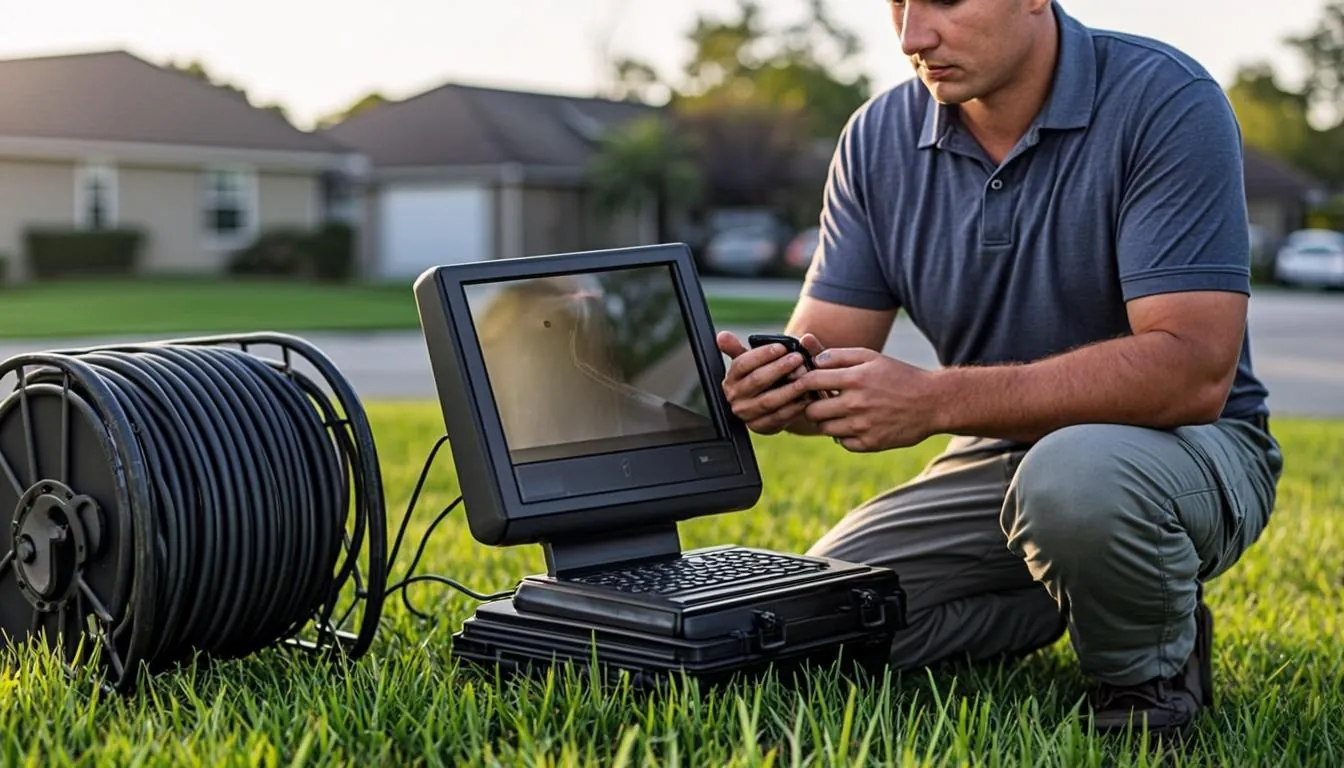
A proper inspection produces a record, not just a look. Footage is saved, each defect is logged with its approximate distance from the access point, and a locating pass can mark significant spots on the surface with flags or paint. Distance references matter, because the difference between a repair at one section and a repair far down the line is the difference between small and large work. Notes also pair each defect with a sense of urgency, so you know what needs attention now and what can wait for a future visit.
Ask for a copy of the recording and the written findings regardless of who performs the repair. Documentation protects you when comparing quotes, and it gives the repair crew an exact target before the first shovel goes in.
Reading Findings: Cleaning, Repair, or Replacement
Camera findings map naturally onto three responses. Buildup and scale that leave the pipe wall sound usually call for professional cleaning, followed by a confirmation pass to verify the result. Localized defects, like one offset joint or a single cracked section, point toward targeted work at the marked position, and sewer line repair handles exactly that scope. Widespread deterioration, with defects distributed along the run, is the pattern that justifies replacement rather than patching. Between those poles sits a common middle path: renewing the worst sections first, then protecting what remains sound with maintenance.
Sewer I&I belongs in the local picture too. In this region, rainwater and groundwater enter public sewers through defective pipes, joints, and service laterals, which is why Sarasota County runs an active reduction program and expects private laterals to be maintained. A defective lateral is not only your problem; it feeds a system-wide one.
Questions to Ask About Any Inspection Report
Wherever you get an inspection, hold the report to a consistent standard. Five questions separate a useful report from a vague one:
- Was the full line viewed? A pass that stops at a blockage leaves the far end unassessed.
- Where is each defect? Positions and distances from the access point should be recorded, not guessed.
- How severe is each finding? A crack and a crack with soil infiltration are different problems.
- Is the footage available? A written summary without video is hard to verify or compare.
- What does the recommendation fix? The proposal should trace directly to specific findings on the recording.
Reports that meet this standard let you hire with confidence, whether the next step is cleaning, a spot repair, or a replacement plan.
When to Call a Professional in Sarasota
Book a sewer camera inspection in Sarasota before buying an older home, before a recurring clog gets "cleaned" a third time, or whenever a backup has no obvious cause. Sarasota Leaks records every inspection, marks defect locations, and walks you through the footage before recommending cleaning, repair, or replacement, drawing on 20+ years of drain work in the area. A trustworthy inspection starts with documented findings, and the fix should follow the footage. Call (941) 337-1250 to get the inside view before you commit to any repair.
Related Services
The adjacent services below carry this job forward: