A plumbing inspection after a storm in Sarasota needs nothing more than a flashlight, a screwdriver, and a systematic path from the water meter to your farthest fixture. Storms stress buried pipes and loaded sewers in ways that surface as small clues, and the clues are easiest to read in the first days after the rain stops. Work through the steps in order, and you will either clear your plumbing or catch a problem while it is still small.
The Checklist at a Glance
Here is the whole sequence at a glance. Move top to bottom, and resist the urge to skip the meter.
- Watch the meter with every fixture off.
- Walk the perimeter for standing water near the foundation and cleanouts.
- Test fixtures and drains one by one, lowest floor first.
- Check irrigation components and any exposed pipe.
- Note sewer smells or gurgles, which can signal infiltration.
- Photograph anything abnormal for insurance documentation.
Start With the Meter
The meter test comes first because it answers the biggest question in a single motion, and it anchors any plumbing inspection after storm conditions. Close every fixture, appliance, ice maker, and irrigation zone, and set any water softener to bypass if you know how. Then open the meter lid and watch the low-flow indicator, the small dial or triangle that spins with even a trickle.
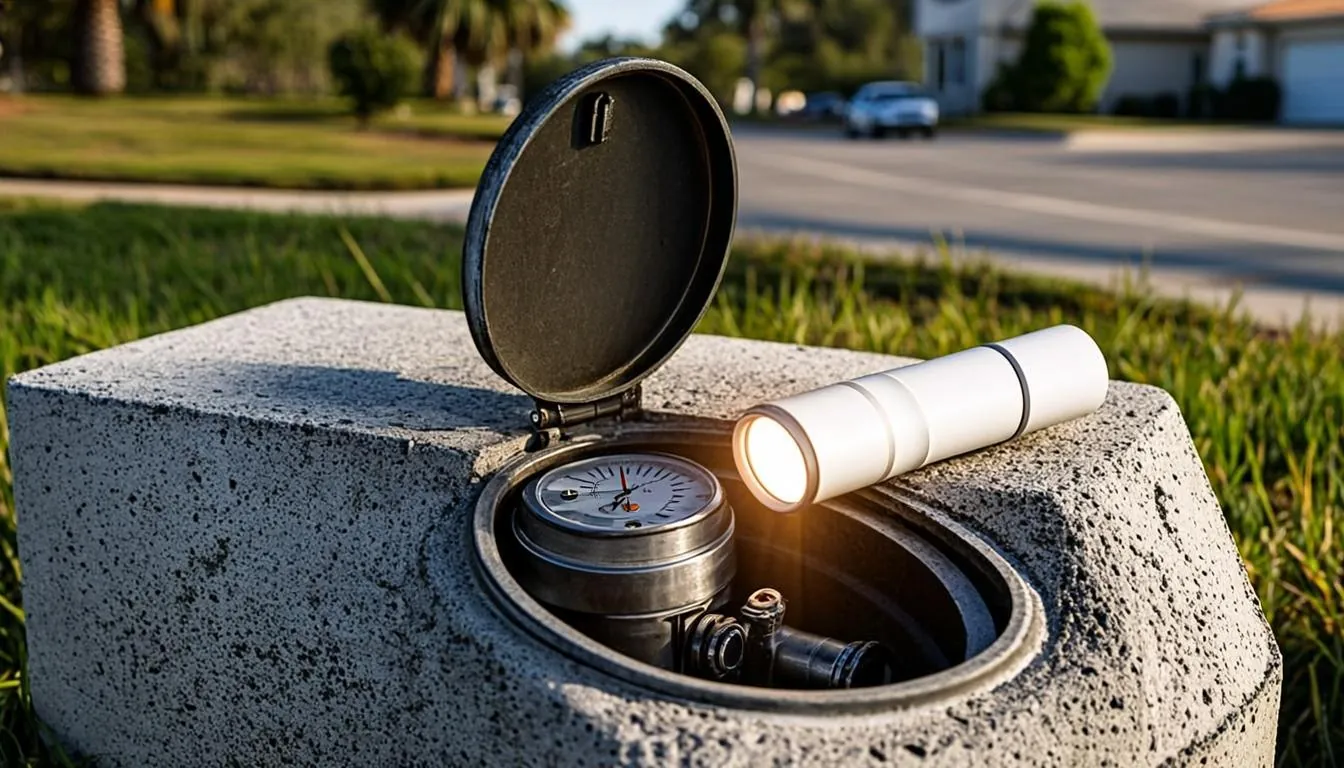
No movement is good news. Movement with everything off means water is escaping between the meter and your fixtures, exactly the kind of weakness a soaked week can expose in an aging service line. Note the pace of the spin, because it gives a professional a useful head start.
Walk the Perimeter
Take the long way around the house and read the ground. Standing water that lingers near the foundation after the rest of the yard has drained deserves attention, along with wet spots that follow the path of a buried line. Look specifically at the sewer cleanout, the capped pipe usually found near an exterior wall or out in the yard: standing water at the cap, or a cap that has popped loose, marks the private sewer side as a trouble spot.
While you are outside, check where the water service enters the building and give the hose bibs a glance. Drips at exposed fittings that were dry before the storm tell you a fitting has shifted or cracked.
Test Fixtures and Drains One by One
Indoors, bring the system back one fixture at a time, lowest floor first. Flush each toilet, run each sink and tub for a minute, and watch how the water leaves: fast swirl, lazy drain, or gurgle. A gurgle from a distant fixture while another drains is worth noting, because it points to air moving where it should not.
Hold the appliances until the fixtures have checked out. Run the washer and dishwasher only after the drains beneath them have proven they can carry flow, so a backup does not catch you mid-cycle.
Irrigation and Exposed Pipe
Irrigation runs on its own system, and storms find its weak points early. Walk the zones and look for sunken heads, soggy stripes, or misting at fittings, then run each station briefly and watch for spray where it does not belong. Exposed pipe in garages, attics, and utility closets deserves a slow look too, since a joint that weeps after a storm has been working loose for a while.
Keep irrigation separate from the domestic supply in your diagnosis. Irrigation lines are pressurized on a schedule, so a wet spot that appears only while a zone runs points to the irrigation system, while a spot that grows around the clock points to the supply line.
Sewer Smells and Gurgles: The Infiltration Clue
Storms push the sewer system hard, and odor or gurgling in the days afterward can signal rain finding its way into pipes through defective joints, fittings, or connections. Run water into every trap, including guest baths and floor drains, since dried traps are the simplest explanation. If the smell persists after the traps refill, or several fixtures gurgle together during rain, the system is describing an entry point that an inspection should find.
Photographing for Insurance
Documentation is cheapest at the moment you notice something. Photograph standing water with an object in frame for scale, capture the meter with the lid open and the indicator visible, and take dated shots of any wet drywall, baseboard, or cabinet floor. Consumer guidance from the Florida Department of Financial Services notes that coverage for water backing up through drains or sewers may be excluded but added by endorsement, so check your own policy to know where you stand before you need it.
Photographs of a dry, healthy system have value too. A dated set from after each storm makes it far easier to show when a problem began if one develops later.
When to Call a Professional in Sarasota
Some findings close themselves: a dry meter, clean drains, and no odor mean the storm passed without plumbing incident. Everything else, from a spinning meter to a stubborn smell, deserves a professional plumbing inspection after the storm, and our leak detection team in Sarasota pinpoints the source without opening walls to search. Call (941) 337-1250, tell us what you photographed, and we will take it from there.
Related Services
Whatever the visit confirms, these pages hold the next step: